

Article and photos by Joshua Brown (Imperial College London)
Trading London’s familiar grey skies for the freezing winds of Cambridge, Massachusetts, in January was an invigorating shift. Here, I reflect on my experience following a two-month placement at the Massachusetts Institute of Technology (MIT), funded by the pro2 network+ Residency Scheme.
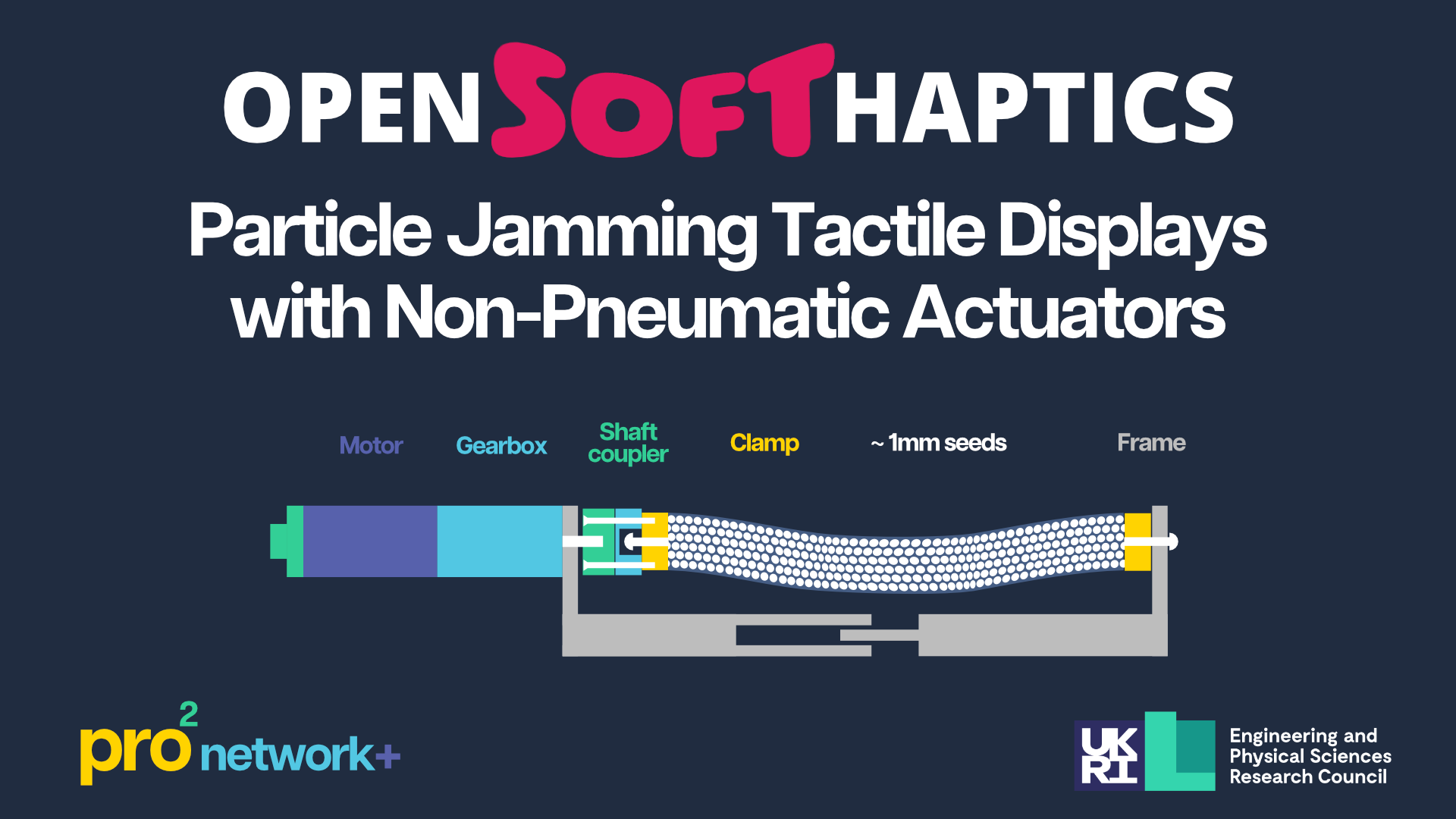
My home for the residency was the Cutaneous Sensory Lab in the Department of Mechanical Engineering, where the goal was to build and validate OpenSoftHaptics (OSH): a DIY-friendly haptic interface that changes its softness on demand using mechanical constrictive particle jamming. Sophisticated, shape-shifting haptic feedback is still largely confined to labs with specialist fabrication facilities, and we want to put it within reach of any researcher or maker who wants to experiment with it.
Ironically, the first thing that helped was having exactly such facilities to hand. Both the Cutaneous Sensory Lab and the neighbouring Bioinstrumentation Lab are equipped for rapid prototyping and mechanical evaluation, which hugely accelerated the design cycle: a change to the jamming chamber could be modelled in the morning, printed over lunch and tested against a mechanical fingertip by the afternoon. For a project whose whole premise is that this technology should be reproducible on accessible hardware, being able to iterate quickly and fail cheaply and often was worth as much as any single result.
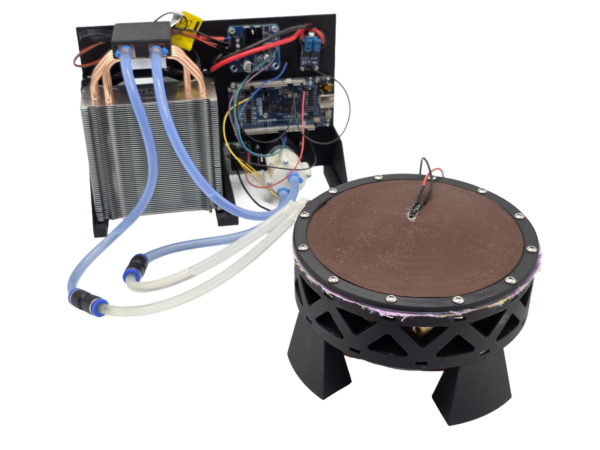
MIT’s experts on thermal haptics helped to build a multisensory softness- and temperature-changing version of the system.
Validation took me into the impressive MIT.nano facility, where I spent several days on the surface profilometer. Softness is only half the story – as the particles jam, the surface texture of the touchpad changes too – and the useful question is not just how much it changes, but how that compares to the materials people encounter every day. So, I measured the OSH touchpad against samples of wood, rubber and other everyday materials, mapping the microscopic topography of each. Those reference profiles give us a concrete yardstick to design against, rather than relying on how a prototype happens to feel on the day.
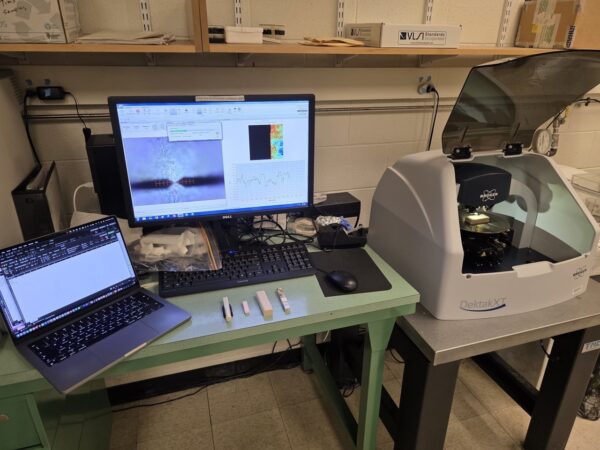
Joshua made extensive use of the characterisation facilities in MIT’s nanofabrication facility – MIT.nano – to understand how the properties of OpenSoftHaptics devices compared to real materials.
Arriving in January also meant landing in the middle of MIT’s Independent Activities Period (IAP). Running since 1971, IAP clears four weeks of classes and exams so that staff and students can pursue short courses that are focused, intensive, or simply unorthodox. I used mine to take classes in intellectual property and in artificial intelligence for software engineering, and to build the official OpenSoftHaptics website (https://opensofthaptics.com), setting the stage for our full release. A special mention goes to Matt Sutton, the pro2 Research Designer whose graphics support, alongside the Residency Scheme funding, gave the site its professional polish.
Walking the Infinite Corridor, the weight of MIT’s engineering culture is hard to miss. This is, after all, where the word ‘hack’ picked up its modern meaning – a clever, unconventional solution to a problem – among the students of the Tech Model Railroad Club in the 1950s. That instinct proved contagious, and it shaped how we treated the OSH prototypes: push it until it fails, ask someone from another field why it failed, print another one.
That appetite for outside perspectives is really what the MIT ecosystem runs on. Working alongside my host, Dr. Lynette Jones, I was able to widen the scope of the project, and I formed new collaborative links with Sam Chin at the MIT Media Lab and Jas Brooks at CSAIL. Advancing multimodal haptics means getting mechanical engineering, human–computer interaction and computer science into the same room, and MIT makes that unusually easy.
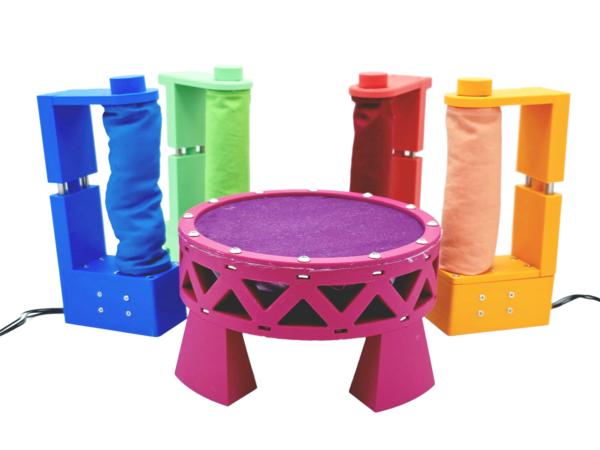
The OpenSoftHaptics project resulted in a range of fully 3D printable softness-changing haptic devices.
None of this would have been possible without the pro2 network+. My thanks go to the pro2 team for backing me through the Residency Scheme – the chance to travel, build and learn at one of the world’s most famous engineering institutions is a career-defining privilege. Thanks also to Dr. Lynette Jones for welcoming me into her lab; her mentorship, advice and steadfast support provided the ideal environment to turn the OSH concept into a working reality.
-
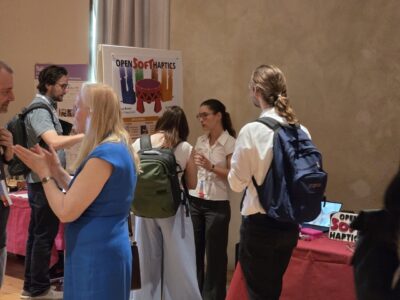
- Attendees at EuroHaptics 2026 were able to get hands-on with OpenSoftHaptics devices and experimental vibration and temperature-changing systems.
-
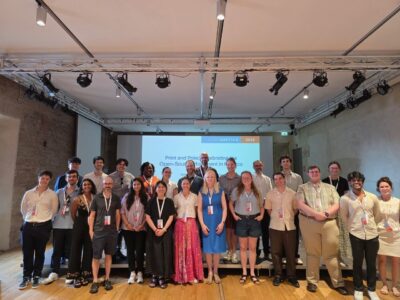
- OpenSoftHaptics brought key haptics creators to Italy for a half-day launch event celebrating the open-source movement in Haptics at EuroHaptics 2026.
We launched OpenSoftHaptics publicly at “Print and Poke: Celebrating the Open-Source Movement in Haptics“, a half-day workshop at EuroHaptics 2026 – and you can now download the files and print your own!