

Join us for the third annual Device Prototyping Summer School!
Taking place from the 14th to the 17th of July at Lancaster University, this is a great opportunity to improve your digital device design skills with a view to scaling up beyond a prototype. Attendees will benefit from access to state-of-the-art university labs for hands-on learning as well as instruction from world-leading experts in electronic device production.
⚙️ Ideal for anyone with an interest in low-volume digital device creation including makers, visionaries, and researchers from any discipline.
⚙️ Open to all levels of experience and all career stages – from student to established professional.
⚙️ Up to thirty subsidised places available – food, accommodation and all activities covered for just £100!
⚙️ Prizes available to help the most promising prototype ideas move towards production.
Led by Professors Steve Hodges and Joe Finney, hosted by Lancaster University’s Devices Lab, and supported by the EPSRC-funded pro² network+.
2026 Agenda
Instructors
 Steve Hodges is an internationally recognised leader in interactive and embedded device creation. He has built and deployed prototypes at all scales, and many of these have transitioned to volume production resulting in millions of devices in market globally.

Joe Finney is a global figure in empowering non-experts to innovate with technology, in particular helping them to learn about and build lightweight embedded systems. His work has also led to millions of embedded devices that are in daily use around the world.
Examples of devices made in the hundreds, thousands and millions that Steve and Joe have worked on include the BBC micro:bit, i-String Lite artistic lighting, the Microsoft Adaptive Accessories, the Azure Sphere IoT system, the Microsoft Touch Mouse, and the Jacdac and .NET Gadgeteer prototyping platforms.
-
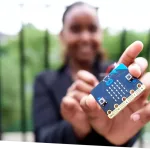
- The micro:bit pocket-sized computer used by 66 million children worldwide as they learn to code.
-

- A 5m hummingbird made of the i-String Lite artistic lighting system developed by Joe Finney and Alan Dix.
-
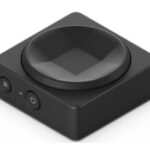
- Microsoft Adaptive Accessories – d-pad controller.
Speakers

Nursel Dogar
Global Business Development Manager at Farnell
Nursel Dogar is a Global Business Development Manager at Farnell, working with the Micro:bit Educational Foundation for broadening the impact of micro:bit globally. Nursel has more than 20 years’ experience in every stage of the product lifecycle from design, test to volume production. She holds a MSc in Electrical and Electronics Engineering from University of Leeds.

Paul Dietz
Inventor, Maker and Affiliate Professor at the University of Washington
Paul Dietz is a former Disney Imagineer who is bringing animatronics and other storytelling projects to the classroom. He is best known for DiamondTouch – an early multitouch system that helped launch the touch interface revolution. Currently, he holds faculty appointments in Computer Science at both the University of Toronto and the University of Washington and teaches courses on prototyping and physical computing.

Simon Monk
Author and Product Designer at Monk Makes
Known for being the author of books on electronics and programming, including the best-selling ‘Programming Arduino’ and ‘The Raspberry Pi Cookbook’. He’s sold over 800,000 books worldwide and his books have been translated into 10 languages. These days he spends most of his time designing products for MonkMakes and improving their manufacturing process at their workshop in Lancashire, UK.

Mike Fraser
Professor of Human-Computer Interaction and Head of the School of Computer Science at the University of Bristol
In addition to his roles as Professor and Head of School at the University of Bristol, Mike is also the Chair of the pro² network+ Steering Group. His research interests relate to how computers are made, what they are made from, and how we might support individuals with limited resources to make their own computers.

Anne Roudaut
Professor of Human computer interaction
Dr. Anne Roudaut is Professor of Human Computer Interaction at the University of Bristol, where she leads the Bristol Interaction Group (BIG). Her research explores programmable materials, shape changing interfaces, robotics, and human centred design, creating new forms of interactive technologies that seamlessly integrate into everyday life.

Yoshihiro Kawahara
Professor at the University of Tokyo
Yoshihiro Kawahara is a Professor at the University of Tokyo, specializing in ubiquitous computing and Physical AI. He creates innovative smart materials and soft robots by leveraging the properties of digitally fabricated matter, including 4D printing. His ongoing work tackles the challenge of integrating these advanced substrates with morphological computation to achieve embodied intelligence.

Jonathan Fiene
Founder & CTO of Bergsonne Labs
Jonathan Fiene is the technical architect and lead engineer behind the Tiles modular embedded-intelligence platform. Since his Ph.D. from Stanford, he spent a decade teaching hands-on courses in mechatronics, design, manufacturing, robotics, and entrepreneurship at the University of Pennsylvania, and now leads a robotics design and prototyping group at the Max Planck Institute for Intelligent Systems in Stuttgart, Germany.

Lorraine Underwood
Senior Research Associate at Lancaster University
Lorraine Underwood is an internationally published researcher in computer science education, with a particular focus on physical computing. She has built and developed prototypes for teachers and students to use in classrooms around the UK. Lorraine also creates and films personal electronic projects for element14 part of Avnet, the world’s 2nd largest electronic distributor.

Heather Shaw
Lecturer in Psychology at Lancaster University
Heather Shaw is a Lecturer in Psychology and Behavioural Analytics. She is interested in the study of digital footprint data, and how this can provide information about peoples habits and characteristics. She also explores interdisciplinary methods for psychological assessment, with a focus on the ethics of utilising new technologies in research.
Curious about our past summer schools? Check out the 2024 and 2025 highlights, including submitted papers and the winners of previous prize competitions. Here’s what our previous attendees had to say:
“From the outset of the three days, the engagement and enthusiasm from the attendees was palpable.”
“We arrived with prototypes and left with a deeper understanding of the intricate process of bringing a product to life.”
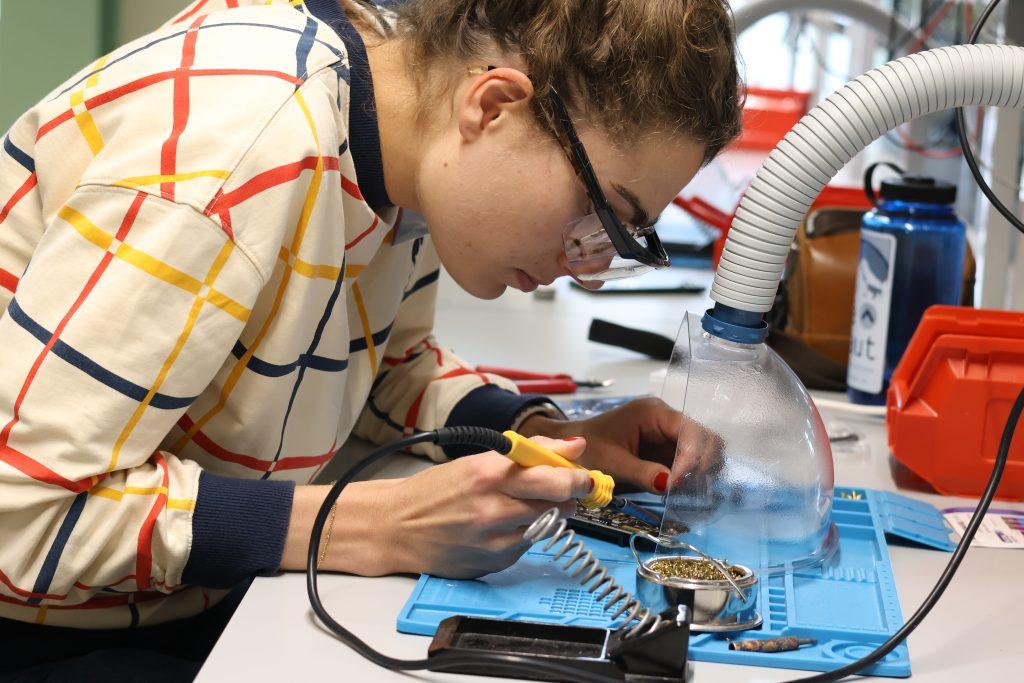
Topics covered include:
⚙️ Electronic printed circuit board (PCB) design and manufacture
⚙️ Component selection and sourcing
⚙️ Moving from a first prototype to tens, hundreds and thousands
⚙️ Design for manufacture (DfM) and for test (DfT)
⚙️ Surface mount (SMT) assembly
⚙️ Testing and test jigs
⚙️ Regulatory compliance
⚙️ Working with manufacturing partners
⚙️ Demo session
Prizes
Thousands of pounds of prizes are up for grabs! The projects with the most potential for impact, based on the assessment criteria below, will be awarded either a grand prize or a runner up prize which is to be used to aid prototype development or to support further learning in a field relevant to device production.
The full terms and conditions of the competition can be found here.
Number of places
Up to thirty places are available at a cost of £100 each. This is a heavily subsidised rate that covers accommodation, catering for all meals and the content of the summer school itself for the duration of the event. Due to the nature of the subsidy, the cost will be the same regardless of how much of the event you attend. Places will be awarded based on the quality of your application, the details of which can be found in the application process section below. In the event that an attendee does not require accommodation, a reduced fee of £50 will be charged.
All attendees must be 18 or over. Attendees from overseas will be responsible for arranging any necessary visas.
Financial aid for domestic travel within the UK may be available upon request to those with particular financial constraints. Attendees should first make a request for funding from their own institution before requesting it from the pro² network+.
Format
The three-and-a-half-day event will be lively and dynamic, leveraging a variety of formats including presentations, demos, hands-on lab-based tutorials, panels and discussions.
The summer school starts Tuesday afternoon 14th July at 1.30pm with registrations open from 11am and runs until 4pm on Friday 17th July. The event includes dinner and socialising on Tuesday, Wednesday, and Thursday evenings.
Application process
Applying to take part is easy! Please complete the application form and submit a short paper (as a Word Document only, no PDFs) to admin@prosquared.org containing a description of your prototype or idea for a prototype along with any pictures, sketches or designs of your prototype by the end of the day, midnight AOE (anywhere on earth) on 13th May 2026. Instructions for writing and submitting the short paper can be found in the application form.
The above short paper template provides an example of what we are looking for. You can also view submitted papers from the 2025 Summer School. We will archive the short papers of successful applicants on the pro² website.
We will accept papers with multiple authors. In this instance, please provide information about each author and their contribution to the work in the bio section. Should your paper be accepted, please note that we may not have capacity to offer places at the summer school to all authors.
Assessment criteria for prizes and sponsored places
The summer school organisers will assess applications based on the content of the application form. Assessment criteria will be based on: well-explained and adventurous but realistic concepts, the impact potential of the ideas, consideration of relevant related work, prior relevant experience of the applicant, and responsible innovation.
Additional Information
Applicants will be notified of the outcome of their application by email.
Further information regarding the accessibility of Lancaster University facilities can be found on the AccessAble website. Please inform of us of any accessibility or dietary requirements in your application form. Quiet spaces and spaces for prayer will be available throughout the event. You can get in touch with us at admin@prosquared.org with any queries you may have.
About pro² and the Devices Lab
pro² is an EPSRC-funded Network+ with the mission to ease the transition from PROtotyping to PROduction for digital devices. pro² is kindly subsidising accommodation and catering costs for up to thirty places!
The Devices Lab at Lancaster University’s School of Computing and Communications works with collaborators from different disciplines and different institutions to design and scale-up electronic devices that help answer all manner of research questions.